Teesside: Place-Based Collaboration for Stronger Communities
Teesside: Place-Based Collaboration for Stronger Communities
While some of the UK’s largest cities have become economic powerhouses in recent years, places like Teesside, which underpinned the UK’s prosperity for more than a century, have suffered decades of neglect, as the industrial base – in the case of Teesside, the steel and chemicals industries – has been hollowed out.
Attempts to address complex challenges of poverty, housing, health, climate and employability with short-term and disjointed approaches exacerbate problems and weaken trust, leading to loss of confidence and a narrative of failure. However, the communities in Teesside are incredibly resilient in some respects, with grassroots leaders working tirelessly to improve the lives and life chances of local people.
Teesside is now receiving significant investment in the energy and maritime industries, creating hope and opportunities for good jobs. bp’s joint venture with Equinor to develop Net Zero Teesside, a significant carbon capture and storage pilot project, is an important component. However, communities, even those living near these developments, are unaware of what is happening and how they might benefit.
In late 2023, through bp’s long-standing partnership with BITC, a new fund was created to help communities across the UK tackle the cost of living and climate crises in a joined-up way. An important focus of this work is in Teesside, helping build relationships with communities by providing support to grassroots organisations at the forefront of supporting those in greatest need, and helping people to prepare for the emerging opportunities that Net Zero Teesside and other key infrastructure projects will bring.
Since BITC’s ‘future proofing communities’ work began in Teesside in spring 2024, we have engaged 68 community organisations. Conversations have surfaced consistent themes, including food and energy insecurity, fear caused by crime and antisocial behaviour, access to skills and opportunity, and intense pressure on grassroots organisations, who are themselves pushed to breaking point. This takes place within a highly fragmented community landscape. In Redcar & Cleveland, over 400 charitable organisations operate, most with turnovers below £100,000, meaning many operate on a small scale and face challenges in delivering longer‑term or more ambitious projects.
As a result, we chose to focus hyper-locally on Dormanstown and Grangetown in Redcar, where community need is acute and the opportunity for impact is significant. In addition, their proximity to the Teesworks site, where Net Zero Teesside will be based, creates a clear route to connect local communities with emerging economic opportunities.
The funding received from bp has enabled BITC to provide grant funding to support 13 community-led projects that have benefited 7,273 people directly and 15,824 people indirectly. The £111,400 distributed to these projects unlocked a further £772,670 in match or leveraged funding – a return on investment of more than 7:1 for direct grant giving. In addition, we have also secured pro bono skills, resources and leadership support, adding an extra £21,400 in value. In Grangetown, there was a clear need to help support a stronger approach to tackling food insecurity, which was seeing growing competition between organisations that just wanted to help. Breaking down barriers and siloed approaches helps focus more on the local need. By understanding the need and opportunity, BITC was able to help shape a local plan to improve access to surplus food and increase local food supply. Through working with schools, local Voluntary, Community and Social Enterprise (VCSE) organisations, housing associations and regional organisations like Fareshare, a plan was created to ensure both access and sustainability of the provision.
However, it is not just through direct grants and project support that BITC has been able to create positive impact for communities. A key part of our role locally has been to help bridge gaps between community groups and with other key stakeholders, such as businesses, schools, local authorities, the police, fire and health services. Examples include supporting Grangetown Generations to strengthen long term sustainability of a key community hub and showing the art of the possible, and work in Dormanstown where dignity led access to essentials is co designed with schools and families, building trust while linking environmental sustainability with everyday need.
Dormanstown Community Partnership
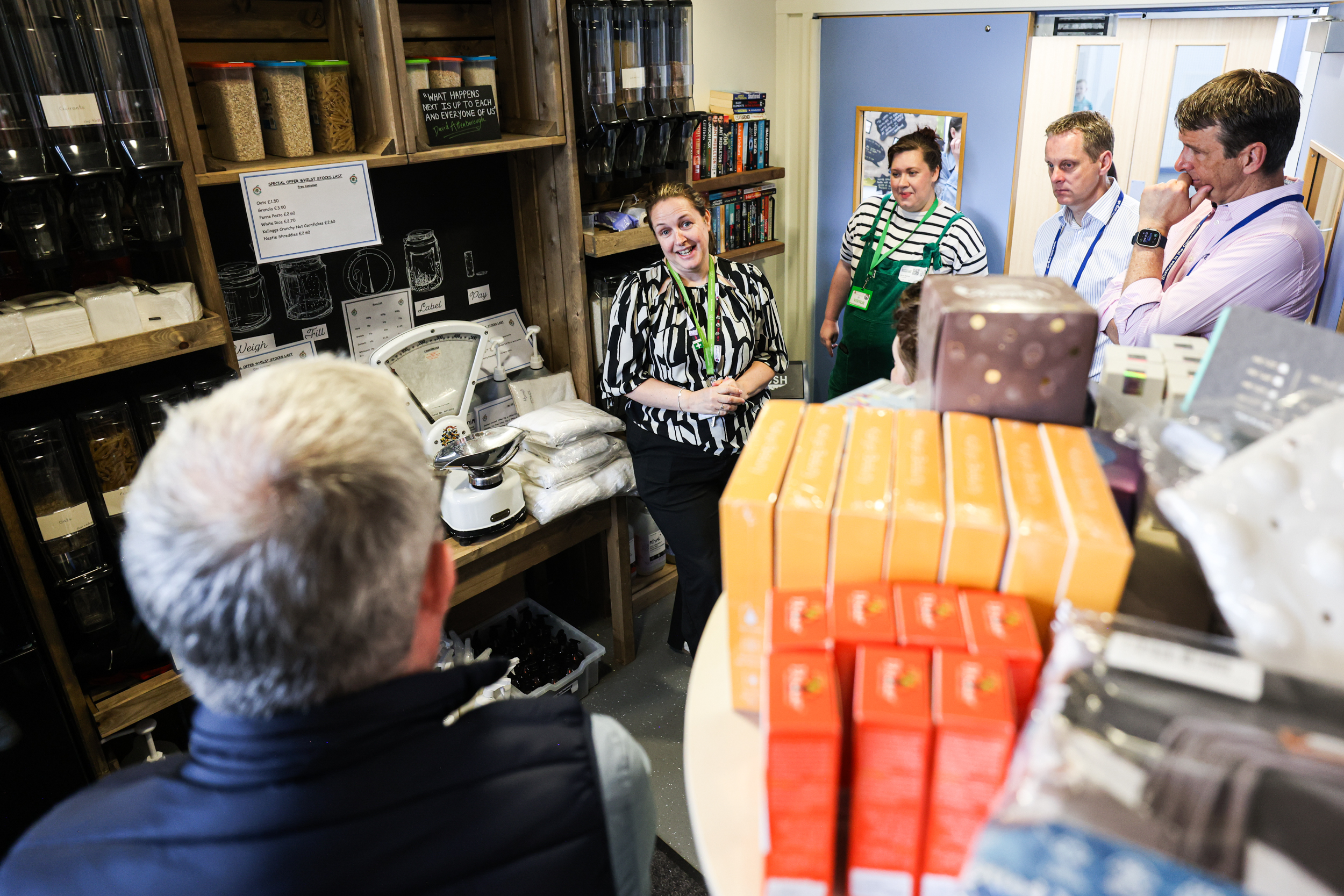
The challenges faced by families here included food insecurity, limited access to essentials and barriers to support, often compounded by stigma. BITC enabled positive change in the place by bringing together a school, housing provider, funders and partners to co-design a dignity-led eco shop embedded within the community. The eco shop now supports more than 100 families, improving access to affordable essentials while building trust, confidence and community ownership.

Grangetown Generations
When the COVID-19 lockdown hit, Grangetown Generations, a volunteer-led group in Grangetown, Tees Valley, stepped in to use a closed library as a base for food distribution and essential support, but it faced rising energy costs and uncertainty over long-term sustainability. BITC provided funding and convened pro-bono legal and business support, helping secure a long-term lease and investment in energy efficiency improvements. This has resulted in a reduction in energy costs of ~50% creating a more sustainable and inclusive community hub and strengthening the organisation’s ability to support residents.
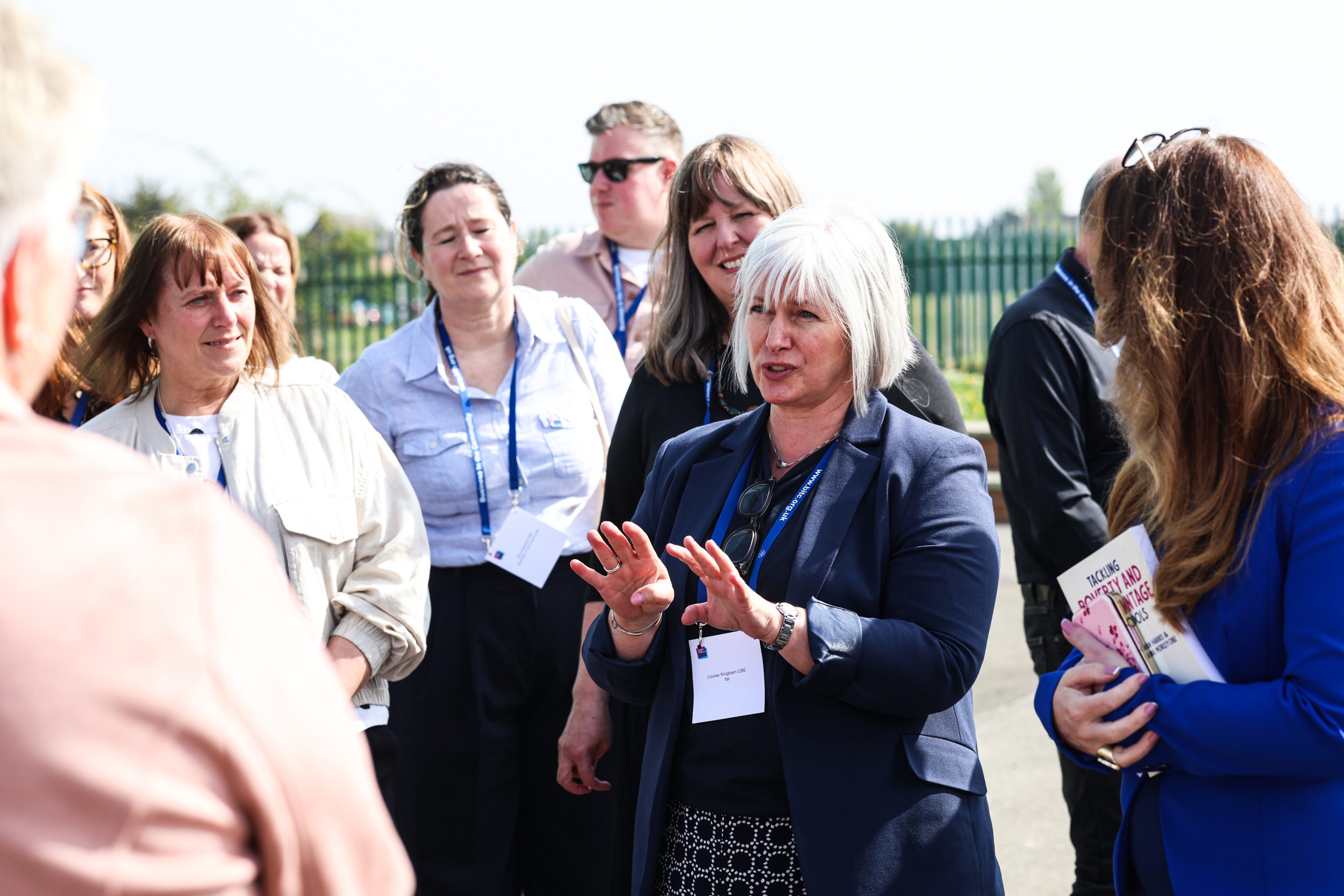
In April 2025, Louise Kingham CBE, Senior Vice President, Europe and UK Head of Country at bp led a King’s Seeing is Believing (SIB) visit for bp. The visit brought together senior leaders from across energy, infrastructure, housing, finance and education to hear directly from communities and frontline organisations about the challenges local people face and the opportunities for businesses to help in addressing them.
The visit was a catalyst for action. Business leaders identified a number of actions that they could take to help strengthen grassroots organisations, coordinate on skills and employment pathways as new economic opportunities become established, and support young people with the transition from primary to secondary school, recognising this as a critical part of helping them to stay in education and progress into training and employment.
Since the visit, delegates committed to working with BITC to drive action in Teesside, joining a new Redcar and Cleveland Place Board that met for the first time in March 2026. The Board is a business-led cross-sector forum focused on aligning leadership and resources to unlock outcomes that no single organisation could deliver alone. With senior leaders from Anglo American, Beyond Housing, Costain, Net Zero Teesside, Northern Gas Networks, Redcar and Cleveland Council, Sembcorp, and the Woodsmith Foundation, the Board has the influence and legitimacy to collaboratively drive a strategic approach that delivers shared value with and for local communities.